
Jumbe Seleman (Jumbenylon)
Marketing Manager - Tanzania, BURN Manufacturing · 4 July 2026 · 8 min read
What Is the Pay-As-You-Go (PayGo) Industry, and Why Does It Run on SMS?
PayGo is the business model behind some of the fastest-growing companies in East Africa: pay for a solar home system, a clean cookstove, a motorcycle, or a subscription in small instalments through mobile money instead of one lump sum. It has put electricity, transport, and financial access within reach of millions of households that a lump-sum price would have excluded entirely.
Now take away SMS and ask what's left. Companies like Zola Electric, Mobisol, Mysol, Sun King, Watu Credit, PalmPay, and DStv don't use SMS as a marketing channel on the side. It's the mechanism the entire payment-and-access model is built on. Remove it, and there is no way to tell a solar unit it's been paid for, no way to verify a loan applicant's phone number, and no way to remind a customer their subscription lapses tomorrow — at the scale and reliability any of these businesses need to survive.
The Unlock Code: How SMS Makes Pay-As-You-Go Solar Possible
Here's the mechanism underneath a PayGo solar system, stripped down: a customer pays their weekly or monthly instalment via mobile money. The provider's billing system detects the payment instantly and triggers an SMS — sometimes a code the customer types into the unit, more often a signal that reaches the unit's own SIM card directly — that keeps the system switched on for the period just paid for.
Payment received
SMS unlock signal sent automatically — the system switches on with no technician visit.
Payment missed
The same SMS mechanism can remotely lock the system until payment resumes.
No app is required on either end for this to work. That matters enormously, because a large share of PayGo solar customers live exactly where 4G coverage and smartphone ownership are least reliable — the population this entire industry exists to serve. SMS works on a basic feature phone with no data plan, which is precisely why it remains the backbone under the polish of a modern fintech or clean-energy brand.
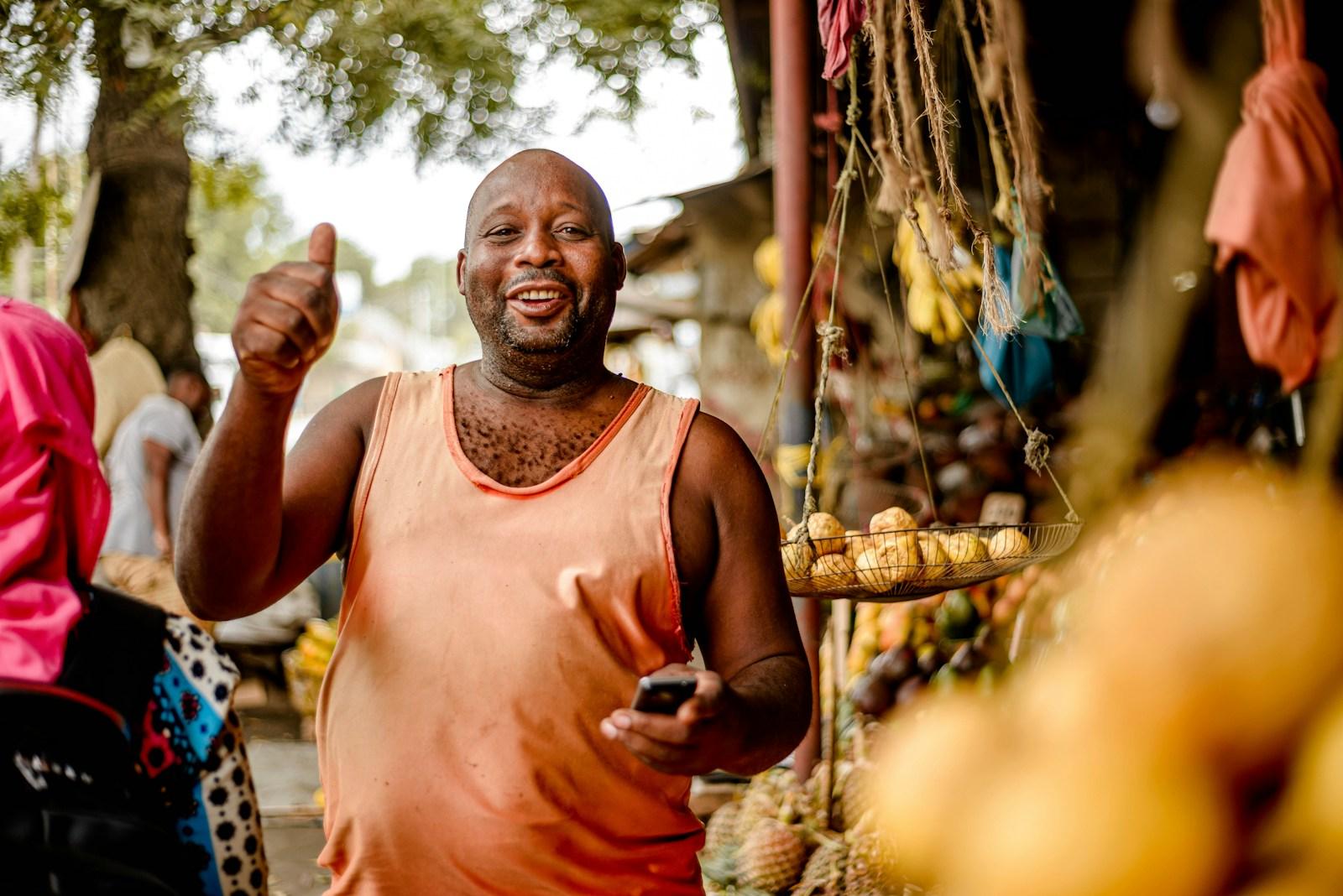
Photo by Ali Mkumbwa on Unsplash — Dar es Salaam
OTPs: The Silent Guard Behind Every Mobile Money Transaction
Where the unlock code protects the hardware, the OTP protects the transaction. Every time a customer registers for a mobile money wallet, applies for an asset-financed loan through a platform like Watu Credit, or confirms a payment on PalmPay, an SMS OTP verifies that the person on the other end actually controls the phone number they claim to. It's the single most widely deployed fraud defence in African fintech — and it has to arrive in seconds, because a customer who waits 90 seconds for a code usually just gives up.
This is also where reliability becomes a revenue question, not just a technical one. An OTP that arrives late or not at all is a completed sign-up that never happened, a loan application abandoned mid-flow, a customer who tries once, fails, and doesn't try again.
Why This Infrastructure Rarely Gets Talked About
In my work in marketing at BURN Manufacturing, I see this pattern constantly: the product story is always the stove, the solar panel, the loan. Nobody markets the SMS underneath it — but follow one customer through their first month on an electric cooking unit and count how many times a text message is the thing actually holding the relationship together. They register, and the stove won't fire up until a token arrives by SMS. They pay, and the confirmation that the money actually landed comes the same way — because a receipt on a screen they can't always access means nothing next to a text sitting in their inbox. The business is promising them a specific number of cooking days for what they just paid, and that promise lives in a message, not a chalkboard. A few days before they're due again, a reminder lands so nobody gets caught mid-meal with a dead stove. Pay off the unit entirely, and they hear about it — in writing, something worth keeping, not a verbal "you're done" that evaporates the moment the call ends. Weeks later, we check in: still cooking every day, still happy with it? Ship a new feature, and they hear about that too, on the exact channel they already trust and already check. None of that is a stove company bolting on "an SMS feature." It's a stove company running its entire customer relationship over SMS — registration, payment, the promise, the reminder, the payoff, the check-in, the next feature — keeping the customer in the loop on everything that matters, at their fingertips, from the first token to the day the loan closes and every quiet week after. The customer doesn't see any of that infrastructure. They see "my stove works because I paid," which is exactly the point. The best infrastructure is invisible. That doesn't mean it's optional.
— Jumbe Seleman (Jumbenylon)
This is also why delivery reliability, not just having an SMS feature, is what separates a PayGo or fintech platform that scales from one that churns customers silently. A missed unlock code doesn't announce itself as a bug — it just shows up as a support call from a customer who paid and still has no power.
Get updates like this on WhatsApp
New guides, product changes, and Tanzania messaging news — no spam, unsubscribe any time.
What This Means If You're Building in This Space
- Delivery receipts aren't optional — if you can't confirm an unlock code actually reached the device, you can't trust your own lock/unlock state.
- OTP speed is a conversion metric, not just a security one — every extra second before delivery costs completed sign-ups.
- Direct carrier routing matters more than it looks — a message routed through an international hub adds exactly the latency an OTP or unlock signal can't afford.
- A developer API with webhooks lets your billing system react to delivery and payment events automatically, instead of polling and hoping.
This is exactly the layer Sakura SMS is built for: direct routes to Vodacom, Airtel, Tigo, and Halotel, sub-second OTP delivery, real per-message delivery receipts, and a developer API with webhooks so a PayGo or fintech platform can react the moment a message is delivered — not guess.
Frequently Asked Questions
What is the pay-as-you-go (PayGo) industry?
A business model where a customer pays for a product — solar power, a cooking appliance, financed transport, a subscription like DStv — in small regular instalments via mobile money, with the product locking or unlocking automatically based on whether the latest payment landed.
Why does the PayGo industry depend on SMS specifically?
Because its customers are disproportionately in areas with unreliable data connectivity, and many PayGo devices have no app or smartphone involved at all. SMS reaches a device or customer regardless of internet access or which apps they have.
What is an unlock code in pay-as-you-go solar?
The SMS-triggered signal that keeps a solar unit switched on for the period just paid for — and, on missed payment, the same mechanism that can remotely lock it again, with no technician visit either way.
What role do OTPs play in mobile money and asset financing?
They verify that the person completing a loan application, wallet registration, or payment actually controls the phone number claimed — the primary fraud defence for platforms like Watu Credit and PalmPay, and one that has to arrive in seconds.
What happens to a PayGo business if its SMS delivery fails?
Missed unlock codes mean paying customers wrongly lose access. Missed OTPs mean abandoned sign-ups and loan applications. For a business whose cash collection model depends on that message arriving, unreliable delivery is a direct revenue hit.
About the Author
Jumbe Seleman (Jumbenylon)
Marketing Manager - Tanzania, BURN Manufacturing
Jumbe Seleman works at the intersection of marketing and development at BURN Manufacturing, where he sits close to both how the product is built and how it reaches the customer who depends on it every day. His focus is cutting through the noise: in a world where AI content and social media algorithms make it harder than ever for a business to reliably reach its own customers, he builds and advocates for the direct channels — SMS, WhatsApp, OTP — that still land in front of the person they're meant for, every time.